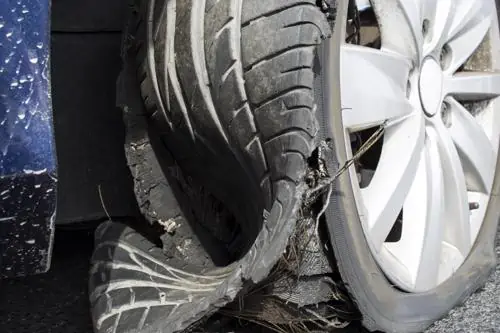
These maintenance steps can help you avoid a tire blowout:
Monitor Your Tire Pressure
Regularly check the pressure of all tires, including the spare tire, to ensure they are well inflated.
This should be done when the tires are “cold” or simply when the car hasn’t been driven for at least three hours.
It is also advisable to stick to the permissible inflation pressure when inflating the tires (the kPA or psi is found on the tire).
Replace Tires on Time
Whenever your tire tread is worn down to 2/32 of an inch, you know it’s time to replace your tire.
Check your tire’s tread monthly, preferably when checking the pressure.
Uneven or significant tread wear should be a signal to replace your tire.
Tire Rotation
Tire rotation ensures even wear of the tires, which minimizes tire blowout chances due to uneven wear.
Proper Alignment and Balancing
Balancing ensures that the wheels turn properly and prevents uneven wear.
Use the Correct Sized Tires
Too big or too small tires may increase the risk of a blowout, and it is advisable to select the recommended tire size when replacing tires.
Avoid Overloading Your Vehicle
Overloading can easily lead to a tire blowout, as excessive weight can exert abnormal pressure on the tires.
It is, therefore, important that you observe the weight limit as provided by the manufacturer.
Check for Tears or Other Deformities
Tire blowouts can also be avoided by ensuring your tires aren’t torn and that there are no tire bubbles or any other deformities.
In case you spot any deformity, have the tire checked by a professional.
Try to Avoid Potholes
Be careful not to run into potholes or other debris, as they may damage your tires and increase the risk of a blowout.