A motorcycle accident case is often different from a typical car accident claim because motorcycle riders have little protection from the force of a collision.
A passenger vehicle has a frame, seat belts, airbags, and other safety systems, while an injured motorcyclist may be thrown onto the road or trapped beneath a vehicle.
These cases can also involve unfair assumptions about motorcycle riders.
Insurance companies may suggest that the rider was speeding, weaving through traffic, or taking unnecessary risks even when a negligent driver caused the motorcycle crash.
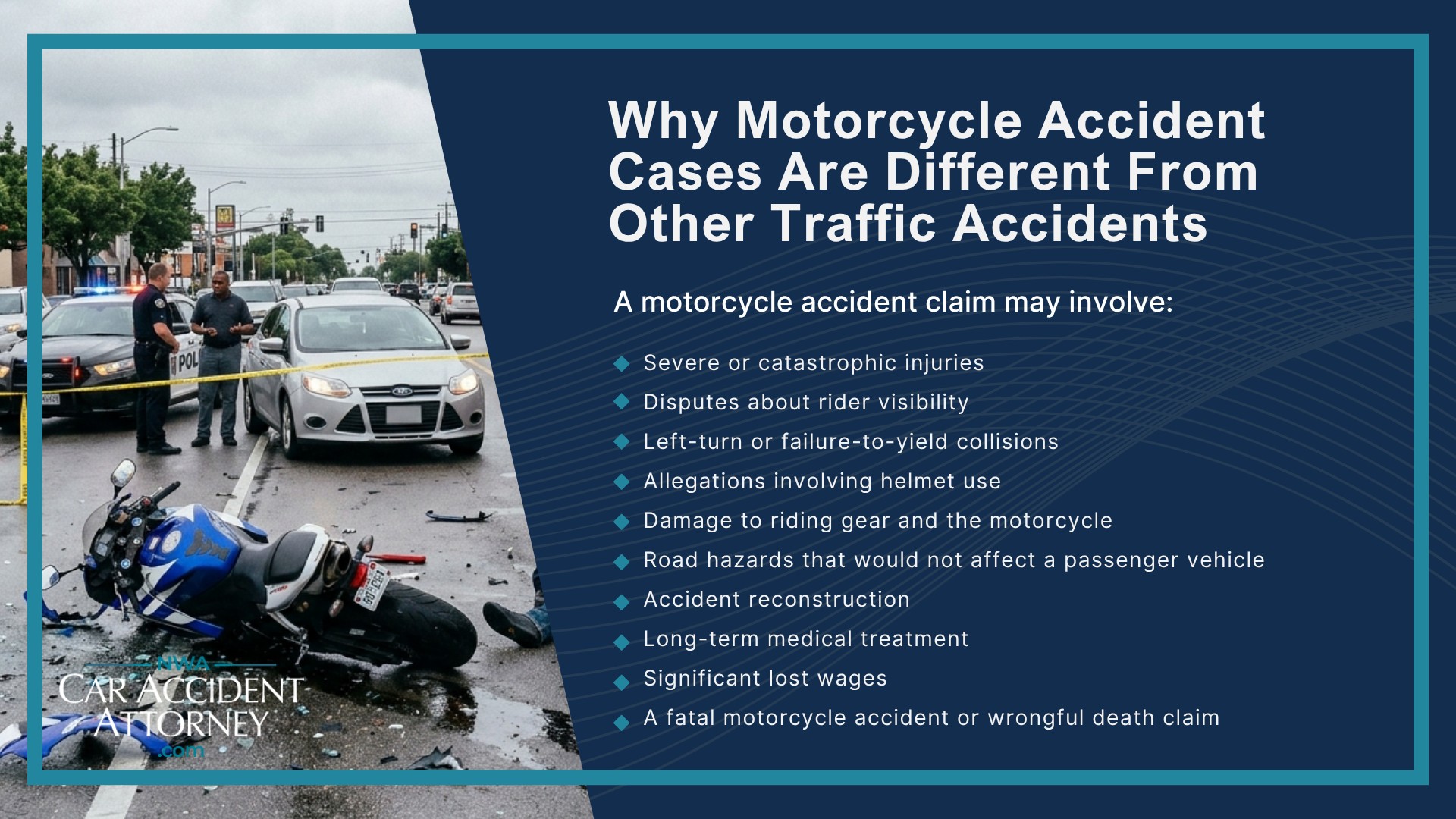
A motorcycle accident claim may involve:
- Severe or catastrophic injuries
- Disputes about rider visibility
- Left-turn or failure-to-yield collisions
- Allegations involving helmet use
- Damage to riding gear and the motorcycle
- Road hazards that would not affect a passenger vehicle
- Accident reconstruction
- Long-term medical treatment
- Significant lost wages
- A fatal motorcycle accident or wrongful death claim
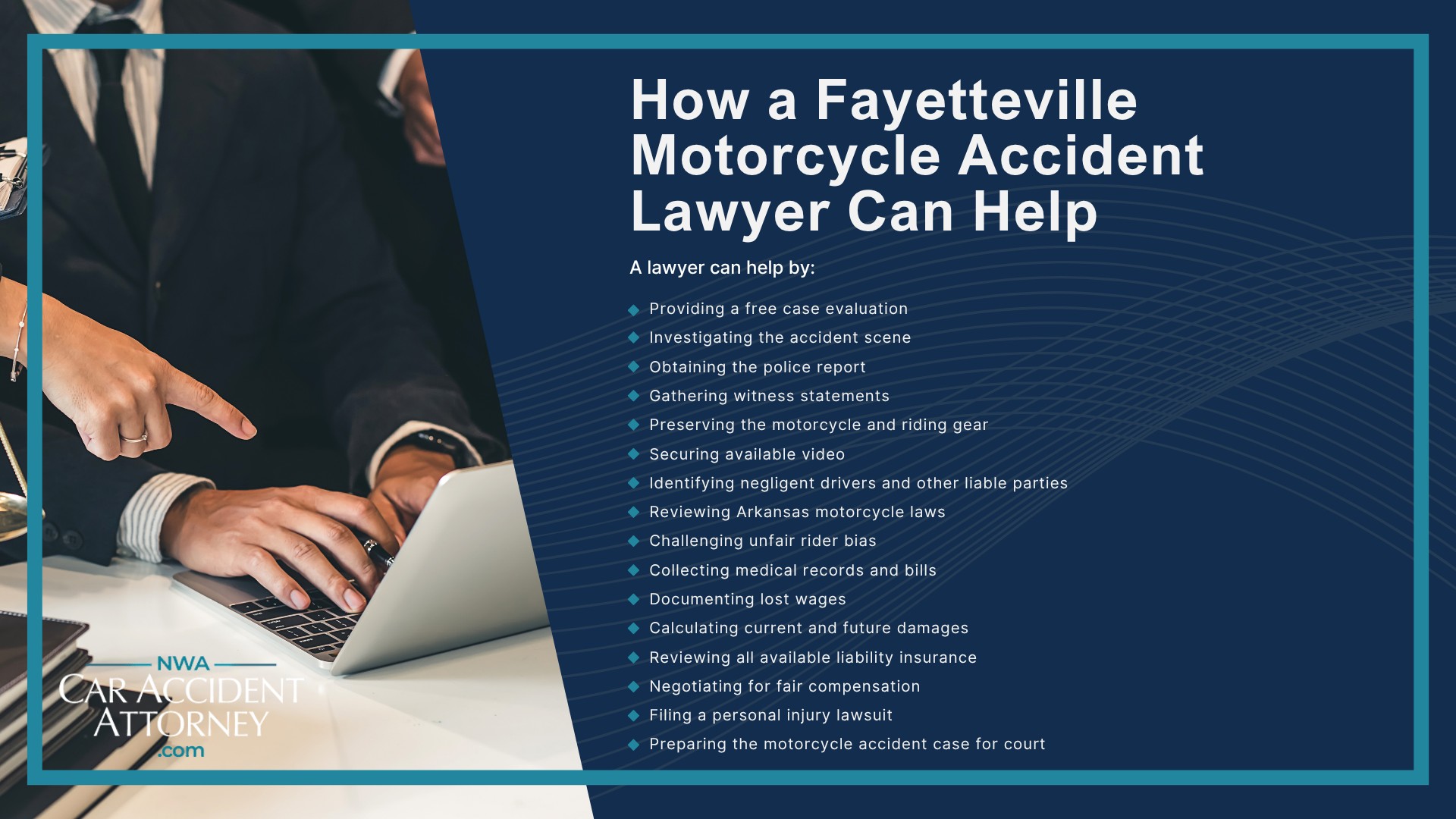
An experienced motorcycle accident lawyer can gather evidence, challenge unsupported claims about the rider, and pursue a fair outcome based on how the accident actually happened.
Common Causes of Motorcycle Accidents in Fayetteville
Many accidents involving motorcycles occur because another driver fails to notice the motorcycle, misjudges its speed, or violates the rider’s right-of-way.
Other crashes may involve dangerous roads, defective motorcycle parts, impaired driving, or reckless driving.
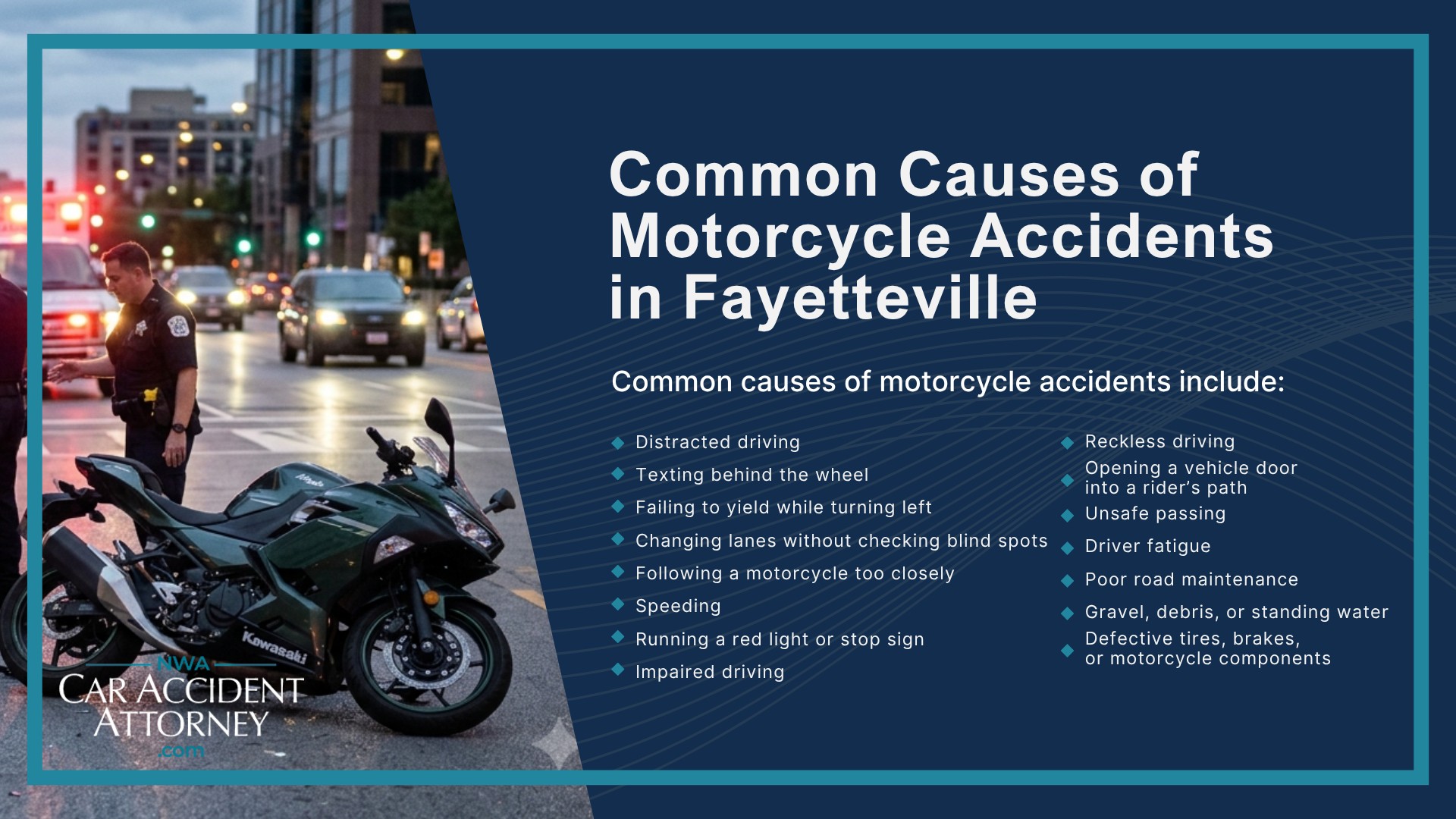
Common causes of motorcycle accidents include:
- Distracted driving
- Texting behind the wheel
- Failing to yield while turning left
- Changing lanes without checking blind spots
- Following a motorcycle too closely
- Speeding
- Running a red light or stop sign
- Impaired driving
- Reckless driving
- Opening a vehicle door into a rider’s path
- Unsafe passing
- Driver fatigue
- Poor road maintenance
- Gravel, debris, or standing water
- Defective tires, brakes, or motorcycle components
Some motorcycle accidents are single vehicle accidents, but that does not necessarily mean the rider was responsible.
A dangerous roadway, defective part, spilled cargo, or another motor vehicle that forces the rider off the road may contribute to the crash.
A Fayetteville motorcycle accident lawyer can review the police report, accident scene evidence, vehicle damage, witness statements, and available video to determine the cause of the collision.
Dangerous Roads and Intersections for Motorcycle Accidents in Fayetteville
Motorcycle accidents can occur anywhere in Fayetteville, but riders may face added risk on congested commercial corridors, interstate ramps, campus-area streets, and roads with frequent turning or lane-changing traffic.
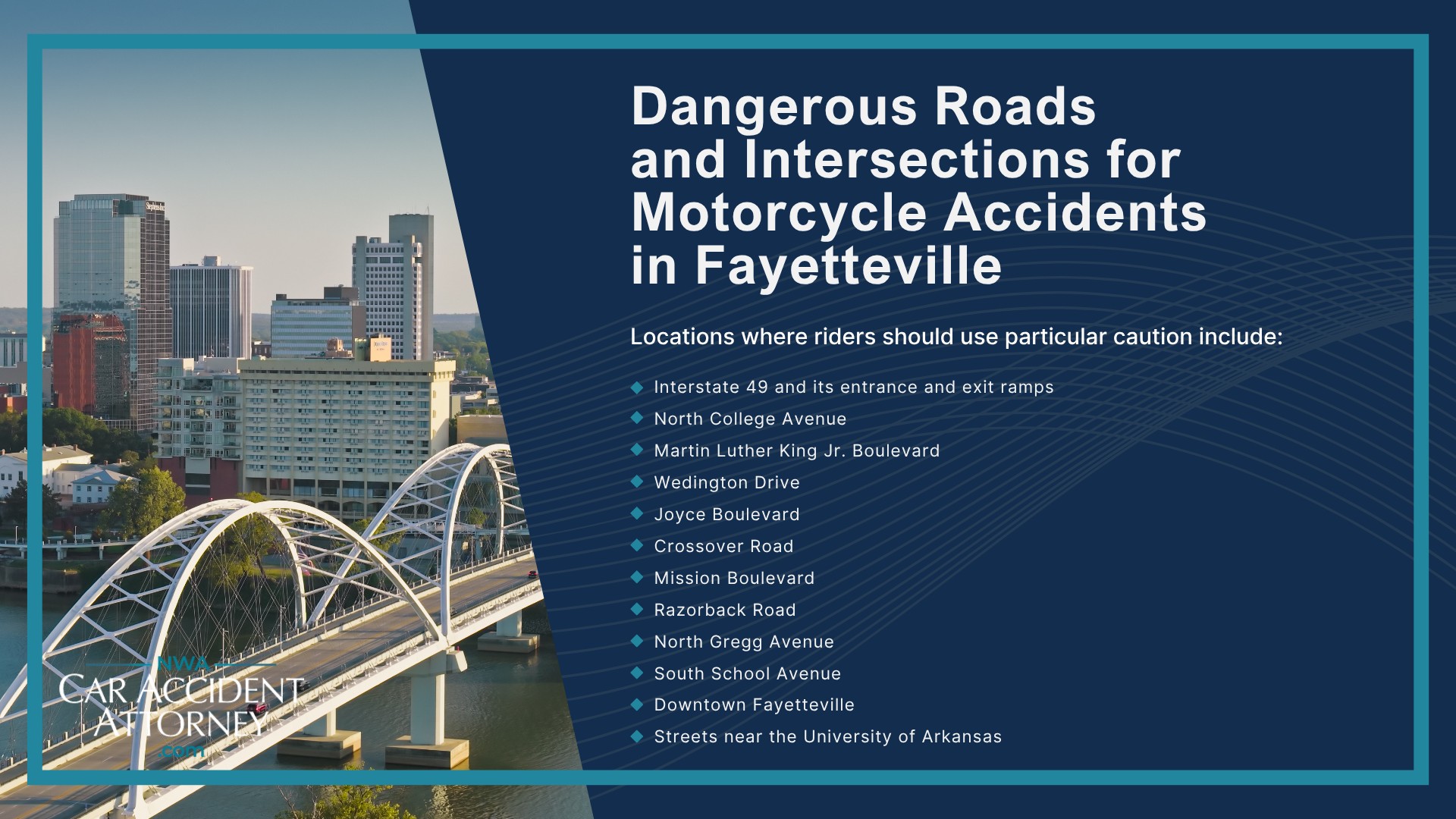
Locations where riders should use particular caution include:
- Interstate 49 and its entrance and exit ramps
- North College Avenue
- Martin Luther King Jr. Boulevard
- Wedington Drive
- Joyce Boulevard
- Crossover Road
- Mission Boulevard
- Razorback Road
- North Gregg Avenue
- South School Avenue
- Downtown Fayetteville
- Streets near the University of Arkansas
The City of Fayetteville has identified several corridors in its High-Injury Network, including portions of North Gregg Avenue, North College Avenue, East Joyce Boulevard, South School Avenue, and West Maple Street.
The city’s Vision Zero resources also provide access to Arkansas crash data from 2020 through 2024 that can be filtered for Fayetteville.
These locations are not presented as a ranking of where motorcycle accidents occur most often.
Every motorcycle accident case depends on the traffic, weather, road surface, visibility, and vehicle movements involved.
Motorcycle Rider Visibility and Driver Negligence
Drivers have a duty to watch for all lawful road users, including motorcycle riders.
A driver cannot avoid responsibility simply by claiming that the motorcycle was difficult to see.
Motorcycles have a narrower profile than passenger vehicles, which can make them easier to overlook when a driver is:
- Turning left across traffic
- Entering a road from a driveway
- Changing lanes
- Merging onto a highway
- Backing out of a parking space
- Looking through a crowded intersection
- Driving while distracted
A common motorcycle wreck occurs when a driver turns left in front of an approaching motorcycle.
The driver may misjudge the rider’s speed or fail to see the motorcycle until it is too late.
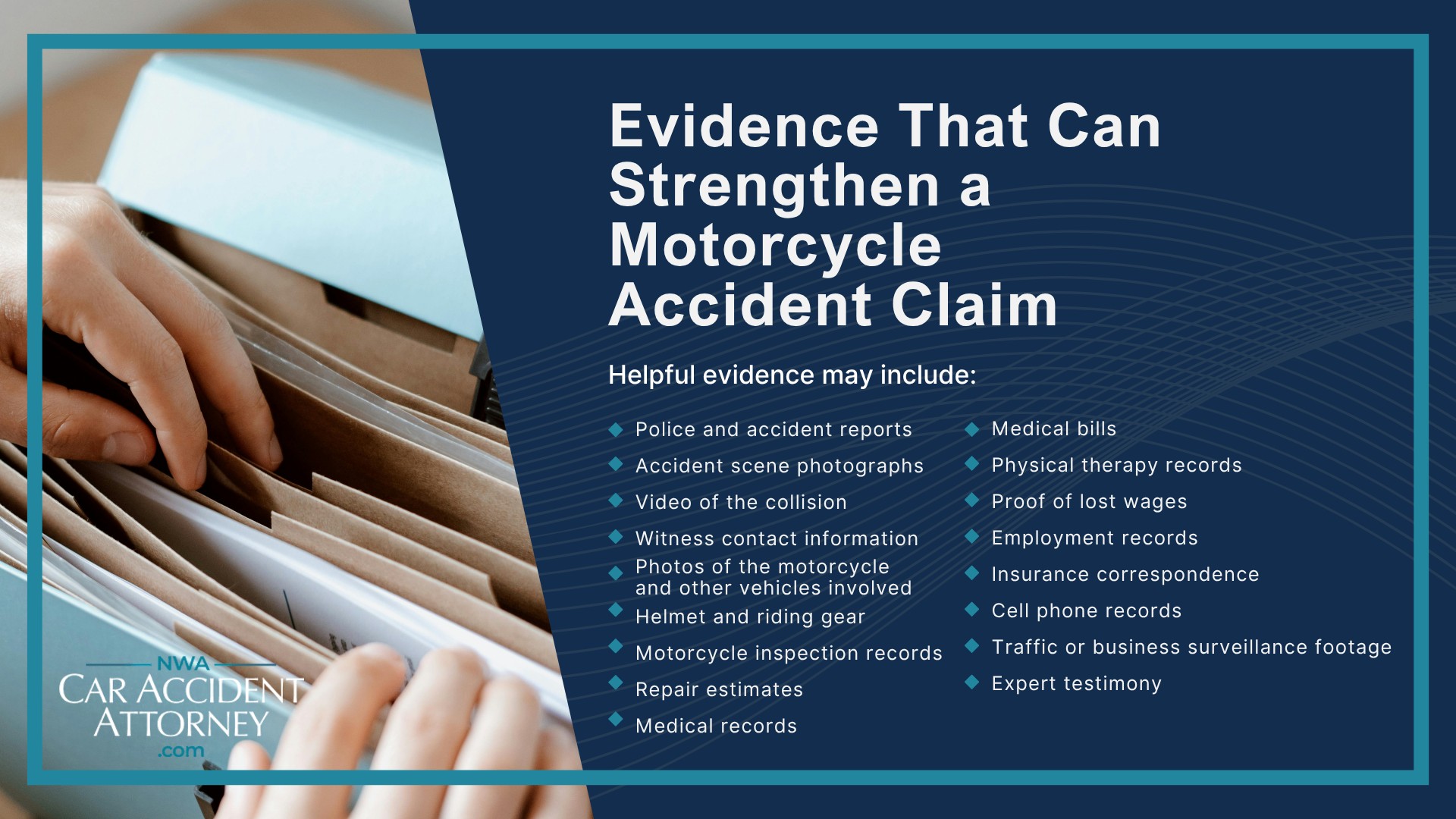
Evidence such as witness statements, dashcam footage, traffic camera video, skid marks, lighting conditions, and accident reports may help establish that the driver failed to keep a proper lookout.
An experienced motorcycle accident attorney can gather evidence before it is lost.
Common Motorcycle Accident Injuries
Motorcycle accident victims frequently suffer more serious injuries than people involved in enclosed motor vehicle crashes.
The rider may be thrown from the motorcycle, strike another vehicle, slide across pavement, or suffer a direct impact from a car.
Common motorcycle accident injuries include:
- Traumatic brain injuries
- Concussions
- Spinal cord injuries
- Paralysis
- Broken bones
- Crush injuries
- Internal injuries
- Organ damage
- Neck and back injuries
- Nerve damage
- Road rash
- Severe lacerations
- Burns
- Amputations
- Scarring and disfigurement
- Chronic pain
- Emotional distress
Road rash can involve more than a surface scrape.
Severe cases may damage skin, nerves, muscles, or underlying tissue and require surgery, wound care, or skin grafting.
The injuries sustained in a motorcycle accident may result in emergency care, hospitalization, physical therapy, follow-up appointments, and years of medical treatment.
Medical records and medical bills can help document the bodily injury and its effect on the victim’s life.